Posts

The Brontës and Waterloo: 10 Things I Learned
Image
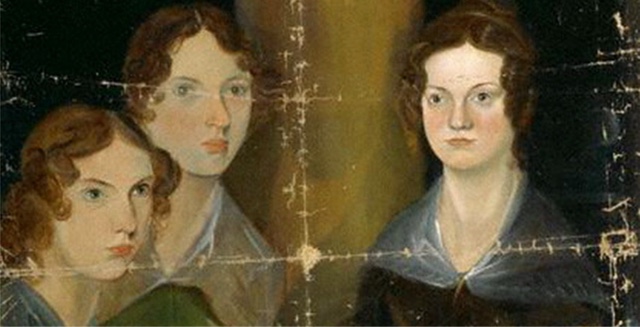
             The Brontë sisters, by Branwell Brontë.  Credit: The Brontë Society. I've just got back from Brontë Parsonage, Haworth (not far from where I live) where I went to see a special exhibition on "The Brontës, War and Waterloo."  It was absolutely fascinating.  If you're in the area, go and see it! For those who live further afield, here are 10 things I learned from it: 1.  All the Brontës were huge fans of the Duke of Wellington.  The Rev. Patrick even wrote him what was basically fan mail.  The Duke's reply (in display in the museum) is typically scathing.  Poor man! 2.  They had a love/hate relationship with Napoleon too (especially Branwell).  Since Napoleon was a Byronic hero to Lord Byron himself, and the Brontës were big fans of Byron (later producing those famously Byronic heroes Heathcliff and Mr Rochester), you can understand the tug of emotions. 3.  It all began with a box of toy sold...

Elizabeth and Carlo, sitting in a tree...

Image
Well, sitting on a sofa, anyway.  Or a sopha, if you prefer. I simply had to share this portrait by the wonderful Kirsty Rolfe (@avoiding_bears) of the Divine Farinelli and I as BFFs.  (It even says so on our mugs.  I hope we're drinking mocha!)  Kirsty had the inspired idea to raise money for relief aid in Nepal by offering a portrait of yourself with your favourite historical character.  I think my selection was a no-brainer!   This is just a scan.  The real thing is on its way to me, in the post.  I can't wait! Thank you, Kirsty, for such a great idea, and for helping to raise funds and awareness at this difficult time for Nepal

My journey into gender-fluid fiction

Image
            Tilda Swinton as Virginia Woolf's Orlando from the film of 1992: BFI Player I recently listened to a fascinating online lecture by Cheryl Morgan about gender fluidity in science fiction and fantasy.  Regular readers will know that issues of gender and (a)sexual identity feature a lot in my blog.  So I was interested to read some of the books featured in the lecture.  Here's what I managed to find in my local library:  Orlando by Virginia Woolf This famous literary novel is quite strange, and I doubt anyone truly knows what Virginia Woolf meant by everything in it.  The title character, Orlando, begins as a 16th-century nobleman and favourite of Elizabeth I.  By the end of the book, she is a woman (still called Orlando) and living in Virginia Woolf's own day, the 1920s.  The part where Orlando becomes a woman is spectacularly unspectacular.  He goes to sleep a man and wakes up a woman.  (I...

An Eighteenth Century Easter

Image
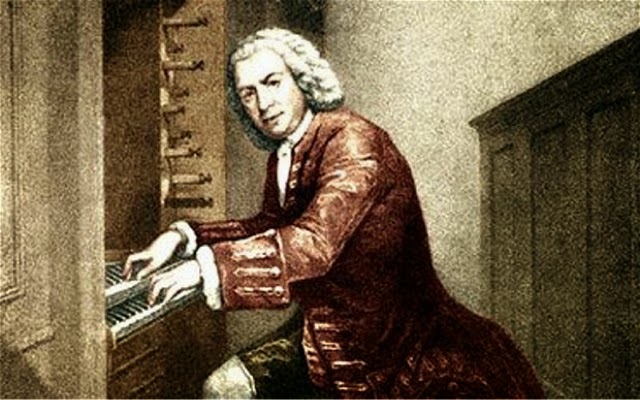
It's Easter!  For Christians, the Feast of Feasts.  For others, perhaps a time associated with eggs, chocolate and weekends off work. But what could you do at Easter in the 18th century?  Let's take a look at a few suggestions from around the world. 1.  Hear a JS Bach cantata.   If you were lucky enough to live in Leipzig, you could hear one of Bach's famous Passions conducted by the maestro himself.  The St Matthew Passion was first performed on Good Friday ( 11 April) 1727 in the Thomaskirche in Leipzig, and revised for new performances in 1736 and 1742.  The St John Passion  was first performed on April 7, 1724, at Good Friday Vespers at the Nikolaikirche.  Bach's Easter Oratorio performed  as a cantata  for Easter  Sunday in Leipzig on 1 April 1725, and revived in  1735 and in the 1740s. (Source: Wikipedia)  2.  Bootleg a Psalm. Legend has it that a teenage Mozart heard Allegri’s Mise...

Ladies, Gentlemen and a League of Liars

Image
Last night, I had my first experience of Liars' League Leeds.  Until a few weeks ago, I had never even heard of it.  In fact, when I first read the call-out for stories, I thought it sounded like a Yorkshire Locke Lamora! It turns out there are Liars' Leagues in Leeds, London and New York- at least.  The premise is simple.  Writers write.  Actors read.  Audience listens.  Everybody wins.  Every month or two, the Liars' League gives a call-out for stories on a particular theme.  Five or so are chosen.  They are then read out by actors on the night.  It's like being on the radio.  Only live.   The theme for this particular night was "Ladies and Gentlemen".  The stories chosen were nicely varied, and covered a variety of settings and moods.  It was interesting how many of the other writers had taken the typical showman's announcement as a starting point.  (That approach to the theme hadn't even occurred to me)....

Cards on the Table...

Image
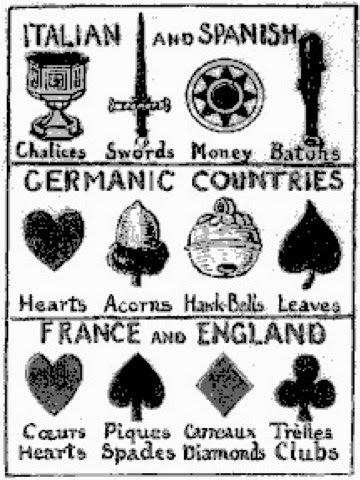
This week, when working on my current work-in-progress, I decided that my characters should be playing a game of cards.  I eventually decided on scopa, an Italian game with a long history.  I downloaded an app so I could learn how to play - and have some idea what I was writing about!  It is a fun game, which involves capturing cards with other cards of the same value.  You can score extra points by clearing the table and by possessing certain special cards. What makes it especially fun for me is that it is played with a different set of cards from the one I am used to.  Before I started researching this week, I didn't know that different European countries have their own traditional packs of cards.  Traditional Italian cards are divided into cups, swords, coins and clubs (batons), the numbers go up to seven, and the three picture cards are all male.  Traditional German cards are divided into hearts, acorns, bells and leaves.  (I love that one!) R...

One God, One Farinelli! Well, two Farinellis, actually...

Image
Iestyn Davies as Farinelli, Globe Theatre, Brenner Photos. One of my most popular posts on this blog has been a short piece on the castrato Farinelli and the music therapy he undertook for Philippe V of Spain.  So what could be more exciting than a play entitled Farinelli and the King?   Taking place in a reconstructed 17th-century theatre?  Featuring arias that Farinelli himself sung?  Starring countertenor Iestyn Davies as the singing voice of Farinelli?  Human spontaneous combustion!! This is what I experienced last night at the Sam Wanamaker Playhouse (the new indoor addition to Shakespeare's Globe in London).  The play was written by Claire van Kampen, and also stars her husband, Mark "Wolf Hall" Rylance as King Philippe, Melody Grove as his Queen, and Sam Crane as the acted part of Farinelli.  (More on those two Farinellis later!)   So, where to begin?  Let's start with the magical space of the theatre itself.  I was dying to see t...