Posts

Showing posts with the label castrati

A Real Sopranist

Image
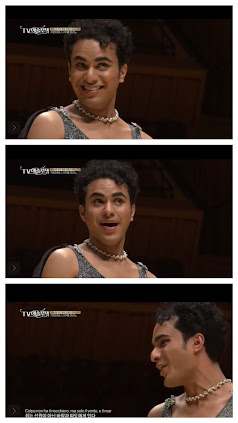
  Back in February, I wrote a piece for LGBT+ History Month about the castrati singers of the 18th century , and my character Carlo in the forthcoming Cage of Nightingales. In that piece, I said, “It’s impossible for us now to know what the leading castrati really sounded like.” That may still be true. (The intense levels of training they went through from boyhood would probably be illegal now, never mind the actual castration). But just this week, I made a discovery I can’t believe I have not made before. There are real-life male sopranos. True sopranos, as opposed to counter-tenors, who sing in their falsetto range, thereby only using part of the vocal cord. (Imagine plucking a guitar string while holding the string a long way down the bridge, to make the note extra-high). True sopranos sing with all their vocal cord vibrating (unless they go into falsetto, which is extra-extra-high!) Which means you’re going to get a much more resonant sound. Entirely by accident, I saw a news r...
LGBT+ History Month: Carlo and the Castrati

Image
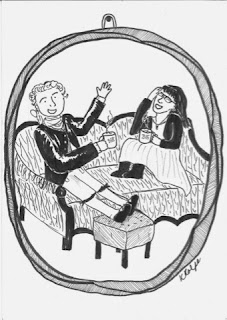
  Me and Carlo: BBFs (by Kirsty Rolfe) I’d like to introduce you to Carlo. Some of you may have met him before, but he’s one of the two heroes of Cage of Nightingales , the first of my Angelio novels, which is finally due to be published this year by Deep Hearts YA . Carlo is a castrato singer. When we first meet him, he’s thirteen years old, a student at the Conservatorio Archangeli, a prestigious music school in the city-state of Angelio. He’s talented, kind, loves beautiful things, hates arguments, can be flirty, and just wants a friend who sees him as more than a beautiful voice. And he’s canonically asexual and biromantic. Just thought I’d get that out there. Carlo is named after Carlo Broschi (aka Farinelli), the most famous of the castrato singers of the 18th century. I’ve written quite a bit about Farinelli and the other castrati on this blog, but as it’s LGBT+ History Month (in the UK at least) I thought I’d share with you a few facts about them. “Portrait Group: The Singe...

Pride Month: My Top 5 Asexual Icons

Image
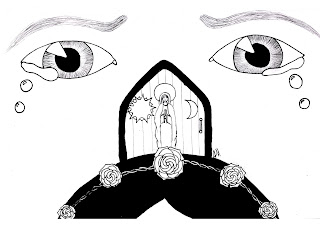
The world is going through very tough times at the moment and there's a lot to make us cry, but there are always things that bring us joy in the midst of despair. For me, one of those things has been the successful crowdfunding of Asexual Myths & Tales   (the follow-up to last year's Asexual Fairy Tales ) right in the middle of Pride Month.  So, what better time to share my top five asexual icons. Just to clarify, I don't mean by this that I necessarily believe all these people and characters are historically/canonically asexual, but that to me they symbolise something about my asexuality; they are somehow poster people for my identity.  The Virgin Mary "Pearls and Roses" by Anna Hopkinson Trust me, as a Christian with both Protestant and Catholic friends and relations, I've heard all the arguments back and forth about whether Mary really was a lifelong virgin. To me, it matters less from a theological point of view than it does from a personal viewpoint....

A Castrato in London

Image
Back in March, I wrote a post about "the castrato poet", Filippo Balatri.  I said it would be great if someone who knew Italian could translate a website I'd found about him and his autobiographical poem, Frutti del Mondo. It gives me great pleasure to say that Leon Conrad, who I interviewed in my last blog, has done just that!  What follows is Leon's rough (and amazingly speedy) translation of a section of Frutti del Mondo  dealing with Balatri's visit to London.  According to Leon, this extract really shows off Balatri's sense of humour, as well as being a fascinating insight into the life of a castrato singer.  A huge thanks to Leon for this favour. It’s dedicated to ‘The Hon. Mr W orld’ by his humble servant.   This is a rough summary of  the section which covers  his trip to the UK , along with some additional notes added on to the text on the website.   I  arrive in  a marvellously walled city. Accompanied by a nobleman. I ask...

The Real Twitter

Image
Spring has come to Britain at last!  It is April, when: smale fowles maken melodye, according to the poet Chaucer.  It's a time when birds fight for their territories, find their mates, build their nests and lay their eggs.  Outside my house, the favourite visitors are starlings, magpies, crows, pigeons and blue tits.  I'm sure we will see new young ones in the course of time. While working on my Angelio books, I have turned up a lot of interesting research regarding birds.  I thought I would share some of it with you here.  Here are 10 interesting facts: 1.  A common trick for a pet goldfinch was to draw up a tiny gold bucket on a chain to get its drink of water. 2.  "Whistling bullfinches" could be taught to sing a selection of folk tunes. 3.  Castrati were taught to imitate birdsong in their vocal performances. 4.  In Sufism, the language of the birds is a mystical language of angels.  (See The Conference of the Birds by 12th cen...

The Castrato Poet

Image
As I work on my current project, the Angelio Trilogy - about the friendship of castrato Carlo and bird-charmer Tammo in the fictitious city of Angelio - all sorts of interesting things come up in research.  This week, I've been writing a poem for use in book 2, and have turned for inspiration to the castrato poet, Filippo Balatri da Pisa (1676-1756).   As far as I know, Filippo is the only castrato who wrote about his feelings and experiences publicly.  He wrote a memoir in verse called Frutti del Mondo (The Fruit of the World) which tells of his travels as a singer, and some of his feelings about himself.  It is probably one of the best insights we have into how a castrato singer saw himself, his life and his fate. Here are some examples (in translation):- "I am young, Italian and castrated and seek my glory only through singing." "I was already made into a mixed gender, That is a soprano, and was quite young. I apply myself to singing in the most human style Doing ...

The Next Big Thing - Cage of Nightingales

Image
I have been invited by poet Gwyneth Box to participate in web-linking project, The Next Big Thing, in which writers from different countries and genres answer the same ten questions about a work in progress. Gwyneth's answers are here .  She writes great poetry: I loved her interactive book of haiku and fragments Poems from the Pueblo , and her new collection Around the Corner from Hope Street sounds interesting. Anyway, since I've answered a lot of questions about Silver Hands recently, I thought this would be a great chance to talk about my current novel project Cage of Nightingales .  So here goes: What is the working title of your book? Cage of Nightingales. It will hopefully be the first book in the Angelio Trilogy. Where did the idea come from for the book? Some time ago, I had a dream in the form of an anime, about a flute-playing boy and a girl who was paralysed from the waist downwards. I left the notes in a book, along with the idea of writing an...

The Castrato and the King

Image
It's no secret that Carlo, the castrato singing prodigy in my current novel project  Cage of Nightingales , is named after the legendary Carlo Broschi, better known as Farinelli, who was born today in 1705 in Andria, Italy.  Among his many accomplishments, Farinelli spent over 20 years at the court of King Philip V of Spain, having been invited by the Queen, who believed Farinelli's singing could cure her husband's mental illness. From my reading, I understand Farinelli to have been a kind, modest and generous man, who didn't let his international fame as a singer go to his head.  At Philip's court, he spent time every day singing to the king, playing the harpsichord, chatting to the king and praying with him.  Although it never completely cured the king's illness, it offered him a great deal of relief, and the royal family were extremely grateful. One can only contrast this with the treatment forced on George III of Great Britain later in the centu...