Posts

Showing posts with the label parthenogenesis

17 Rabbits: This Time It's Personal
Image
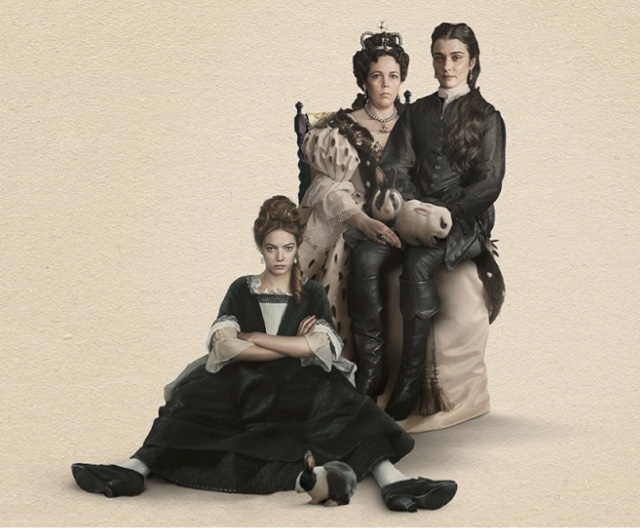
Several times on this blog, I have referred to the story of Mary Taft, who in 1726 supposedly gave birth to 17 rabbits. In my discussions, it has usually been linked with ideas of parthenogenesis, monstrous births and fears about the contents of women's wombs. And now the 17 rabbits have surfaced again, in the film The Favourite , about Queen Anne, the last (officially recognised) Stuart monarch, and her court favourites Sarah Churchill and Abigail Masham. In the film, Queen Anne has 17 pet rabbits, which she keeps in little cages in her private chambers, and lets out to hop around and be petted at various intervals throughout the film. We are told that each of these rabbits represents a child that Anne lost through miscarriage, stillbirth or cot death. I have to say, the rabbits are incredibly cute, and provide some much-needed relief from some of the more disturbing aspects of the film. Having done a fact-check, I can tell you that the real Queen Anne did not keep pet rabbits (as...

Hairy Worms Revisited

Image
On this blog, I have written a number of pieces about parthenogenesis and asexual reproduction. The first was this one: Giving Birth to Hairy Worms , which was inspired by a book called The Manly Masquerade. In it, I noted the Renaissance belief that reproduction could happen spontaneously, that things could be born of putrefaction, and that: Women's wombs could spontaneously produce all sorts of things, from monsters and harpies, to wood, glass or combs, to serpents, toads and hairy worms.  (I particularly like the hairy worms.  Why hairy??)  It seems this idea is less far-fetched than it seems, as today I was reading about homunculi. Rather than attempt to explain it myself, I direct you to this article: The Homunculus Inside . (Trigger warning: the photos are not for the squeamish!) It seems this would also be a good time to tell you that my articles on parthenogenesis (as well as my own experience of both asexuality and gynaecological problems) have insp...

Amazing Asexuality

Image
One of my most popular posts on this blog has been, "Giving Birth to Hairy Worms", all about the Renaissance belief in spontaneous generation (ie giving birth without the need for sexual reproduction).  While the idea may seem far fetched, it turns out that spontaneous generation is in fact all around us.  And it's called parthenogenesis. In fact, it's right in my garden.  The round things growing on my tree are oak galls.  They are created by wingless, asexual female gall wasps, which are born from galls in the tree roots, created by winged females, who have mated with males.  The tree galls hatch more wasps, which begin the double cycle again.  So every other generation of female gall wasps will be asexual and wingless.  The next generation will be sexual and winged. Other creatures that reproduce asexually incude aphids, which produce exact clones of themselves, and a certain species of ant. Amazingly, parthenogenesis is not limited to small creatur...

It's those 17 rabbits again!

Image
Back in January, I wrote about the Renaissance belief in spontaneous generation and "giving birth to hairy worms'.  The worms, incidentally, will be making a welcome return at Swanwick Writers' Summer School in August, in my workshop on "Prince Lindworm."  But you may also remember Mary Taft, who gave birth to 17 rabbits in 1726.  Recently, I read a wonderful article by Terri Windling on the symbolism of rabbits and hares [ read it here ] that brought me back to those rabbits once again. Terri mentioned a couple of things in this long and fascinating article that leapt straight out at me.  (Like a bounding hare, dare I say?)  On the first page of the blog, she says: In Egyptian myth, hares were also closely associated with the cycles of the moon, which was viewed as masculine when waxing and feminine when waning. Hares were likewise believed to be androgynous, shifting back and forth between the genders—not only in ancient Egypt but also in Europea...

Giving birth to hairy worms: bygone beliefs about the facts of life

Image
For Christmas, my brother gave me a book called The Manly Masquerade: Masculinity, Paternity and Castration in the Italian Renaissance  by Valeria Finucci.  I am probably one of the few people in Britain (or the world) who would be pleased to receive such a book for Christmas - one because my current novel, Cage of   Nightingales , has a castrato as one of its main characters, and two because I find androgyny endlessly fascinating. But the book also turned up some strange beliefs which, as a fantasist, I find just as intriguing.  Or maybe not so strange.  Science is only based on what people can observe.  If food goes off, you come back to find it full of maggots.  Where did the maggots come from?  Without a microscope, it's not unreasonable to conclude - as our Renaissance ancestors did - that some creatures could be born spontaneously of putrefaction. However, the spontaneous birth theories didn't end with maggots.  Here are som...