Posts

Sorry, I’ve Got No Head!

Image
In my latest book, More Asexual Myths & Tales, I retell a story from Latin America that I call “The Wife With the Flying Head”.  Support  More Asexual Fairy Tales  on  Kickstarter . I first came across this story in Jen Campbell’s  The Sister Who Ate Her Brothers   (2021). As soon as I read it, I knew I wanted to retell it.  It’s about a wife who - whenever she is in bed with her husband - finds her head detaches from her body and goes flying about without her body.  The symbolism really related to my experience of being a married ace.   I traced a source tale in  The Journal of American Folklore   (1907). That version is taken from El Salvador, but there are versions of the “flying head” myth across Southeast Asia and Latin America, including Malaysia, the Philippines, Cambodia, Thailand, Bali, Chile and Argentina. Readers from those cultures may recognise it as a vampiric creature, and probably know a lot more about it than I ...
Help! I’m Made of Glass!

Image
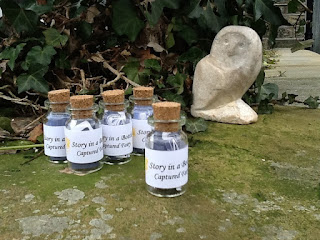
I’ve written on a third collection of Asexual Fairy Tales. It’s crowdfunding now on this link . One of the tales I discovered - and which I retell in the book - comes from the pen of Miguel de Cervantes, the 17th-century author of  Don Quixote.  It’s called “The Glass Lawyer”. The title character Tomás Rodaja, a lawyer from Salamanca, has never been in love. When a lady’s advances to him are snubbed, she feeds him a potion she believes to be an aphrodisiac. But instead of having the effects she hopes, it makes him ill. And when he recovers, he finds he has developed a strange condition. He believes he is made of glass. I won’t tell you the whole story. (You’ll have to wait for the book!) But Tomás becomes terrified of being touched in case he breaks, and travels around in a packing case full of straw. What is interesting about this story is that, although it’s fictitious, there was a condition known as Glass Delusion, documented from the Middle Ages to the 19th century. S...

A Mermaid Saint

Image
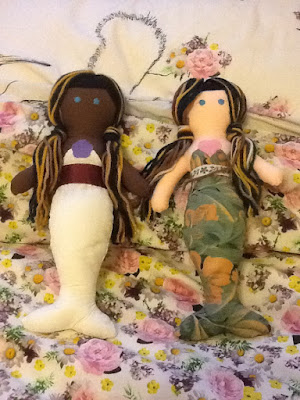
Two mermaid dolls 27th January is the feast day of St Muirgen, also known as Li Ban or Liban. She appears in a number of old Irish annals, such as the Martyrology of Donegal and the Annals of the Four Masters. There's nothing unsual about that: the history of Ireland is crammed to bursting with saints and martyrs. But what's unusual about Miurgen is that she is a mermaid. According to the stories, she was three hundred years under the sea, until the time of the saints. At that time, a man called Beoan was on a mission to Rome, at sea in his curragh (ship) when the ship caught a mermaid (liban) in its nets. She told him she was the the daughter of Eochaidh from Lough Neagh, who was changed to a mermaid when her family was drowned. They brought her to land, where she was baptised by St Comhgall under the name Muirgen (traverser of the sea). The calendar of St Oengus says of her: My God loved Muirgen, A miraculous triumphant being. I love it that there is a mermaid saint! That som...

First Voyage of the Coracle

Image
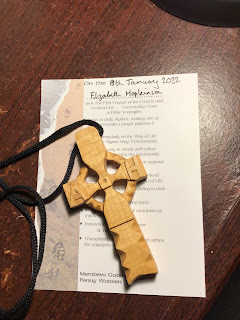
  This Saturday I became a full member of the Community of Aidan & Hilda , a dispersed New Monastic community inspired by Celtic Christian spirituality of the 1st millennium AD. Its members come from many different countries and branches of the church, but all follow a common Way of Life and daily prayer pattern, as well as meeting and supporting each other in various ways. (Mostly via Zoom since I’ve joined, for obvious reasons!) The vow-taking ceremony is called First Voyage of the Coracle, and the newly-vowed member is known as a Voyager. Any die-hard Narnia fans like me will remember a coracle as being the small, round boat Reepicheep the mouse finds in The Voyage of the Dawn Treader , and which eventually takes him to Aslan’s country. As a North Irishman and a medievalist, CS Lewis was influenced in writing Dawn Treader by the ancient Celtic tradition of the imrama journey, a symbolic, spiritual voyage that changes the voyager. One such example from medieval times is the V...

Berry Christmas!

Image
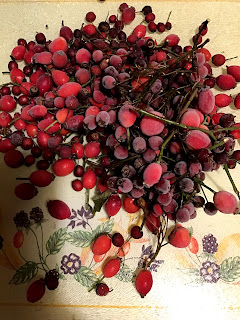
  “The holly bears a berry as red as any blood…” There are many berries we associate with Christmas time. I still need to get around to making this year’s frozen haws (hawthorn berries) into some kind of jam or syrup. (Blame the post-vaccine fatigue!)  I’d like to share with you three traditional Christmas tales about berries and cherries. The Miracle of Marjatta I retell this episode from the Finnish national epic The Kalevala in my book Asexual Myths & Tales. It’s a version of the Nativity story, told through the lens of Finland’s pagan past.  The maiden Marjatta (Mary) becomes miraculously pregnant by eating a cowberry that cries out to her, “Pick me!” When the pregnancy starts to show, one believes her tale, and she is forced to search around for a sauna in which to give birth. She asks Herod (here, the village headman) for use of his sauna, but he refuses. So she goes into a stable, where the cattle create a sauna with their warm breath. Her son becomes the one w...

So Many Beauties, So Many Beasts!

Image
  Beauty and the Beast is my favourite fairy tale. I will read just about any version of it. So I thought I would share with you some of my Beauty and the Beast collection, arranged into categories for your convenience. Classic tellings 1. Madame Le Prince de Beaumont This is the classic version on which most modern retellings are based. (I have it as an e-book). Although here, Beauty is one of six children (three brothers and three sisters) and no particular reason is given as to why the Beast was enchanted. The rest is much as we’ve come to expect: the impoverished merchant, the request for a rose, the sumptuous palace, the magic ring etc. 2. Madame de Villeneuve This is actually the older version. It is much longer and more detailed, with a lot of backstory about the enchanted Prince and the world of the Fairies. Interestingly, in this version, Beauty has a recurring dream about a young man “beautiful as Cupid” (a reference to the tale’s origins in the myth of Cupid & Psyche...

Ace Week: Reviewing Ace-Rep Fiction

Image
  It’s Ace Week! A week set apart to raise awareness of identities on the asexual/aromantic spectrum and to campaign on issues that matter to us. For example, why young people should learn about ace-spec identities in school. This year, I was asked by Stonewall to make a 59 second video on that topic, which should appear on their TikTok during this week. But I’ve also been reading. To help with my own writing, I asked around for recommendations of YA fiction with ace representation. Then I bought two of them and had a read. The books in question are: Loveless by Alice Oseman (author of Heartstopper ) and The Lady’s Guide to Petticoats and Piracy by Mackenzi Lee. These are two very different books. Loveless is a contemporary story about a girl called Georgia who goes to university hoping to find the big romance that has so far eluded her, but ends up finding herself. The Lady’s Guide  is a historical adventure set in an unspecified part of the 18th century, about a girl called ...