Posts

The Magic of Swanwick

Image
Well, here I am on the last day of Swanwick Writers' Summer School.  If you know nothing about it, look it up.  [ http://swanwickwritersschool.co.uk/index.asp]   It's the most brilliant week of courses, speakers, food, mad discos, meditative moments, networking, food, sleep deprivation...   Oh, and did I mention food?  I think this is my eighth year at the school, so by this stage I've been roped into doing all sorts of stuff to contribute to, as well as receive from, the week.  Maybe a bit too much this year...  But I have really enjoyed leading two chapel devotions and running a one-hour workshop on Scandinavian folk tale, Prince Lindworm.  It was amazing what wonderful re-tellings could be produced by people in two 10-minute slots.   As well as giving out, I have managed to take some things in!  I've especially enjoyed a talk by James Moran (who's written for Dr Who and Torchwood), a 4-part poetry course from Debjani Chatterjee, agent...

The Sailing of the Hopewell

Image
                                       5th August is an important date for Gulliver's Travels fans.  It is the date on which Gulliver embarks on his third voyage, aboard the good ship Hopewell.   This journey will take him to the flying island of Laputa, the Academy of Lagado, Luggnagg (home of the Struldbrugs), the necromancer's island of Glubbdubdrib, and the only real-life place Gulliver ever visits: Japan. I made use of this in Silver Hands , having Margaret embark on the same ship on the same day in chapter four, "The Sailing of the Hopewell ".  The name of the ship, Captain William Robinson and any dates I mention are all straight from Swift.  He was having a laugh at the expense of travellers's tales (and making some satirical points about matters closer to home) but I tried to re-imagine the Hopewell as a real ship in the context of the times, a context of the ...

It's those 17 rabbits again!

Image
Back in January, I wrote about the Renaissance belief in spontaneous generation and "giving birth to hairy worms'.  The worms, incidentally, will be making a welcome return at Swanwick Writers' Summer School in August, in my workshop on "Prince Lindworm."  But you may also remember Mary Taft, who gave birth to 17 rabbits in 1726.  Recently, I read a wonderful article by Terri Windling on the symbolism of rabbits and hares [ read it here ] that brought me back to those rabbits once again. Terri mentioned a couple of things in this long and fascinating article that leapt straight out at me.  (Like a bounding hare, dare I say?)  On the first page of the blog, she says: In Egyptian myth, hares were also closely associated with the cycles of the moon, which was viewed as masculine when waxing and feminine when waning. Hares were likewise believed to be androgynous, shifting back and forth between the genders—not only in ancient Egypt but also in Europea...

Flautist of the Woods - Getting in tune with nature

Image
In my current novel-in-progress, Cage of Nightingales (which is now in the editing stage - whoo!) Tammo  wants to be a bird charmer and to play his flute in the woods.  It's impossible to know what that would really be like without trying it for yourself.  The other week, I decided to record a simple flute tune I wrote as "Tammo's Song".  I was going to record it in the Early Music Shop, among the harpsichords and baroque recorders.  But after making a practice recording in the park under the trees, I decided that nothing was going to top that.  There's nothing quite the same as playing your flute in the open air, with the sound of birdsong and running water in your ears.  The music and the natural sounds around you somehow become connected. Anyway, after trying that, I got the bug for playing my flute outdoors.  Actually, I have two flutes - a modern orchestral one, and the one I used for "Tammo's Song", which is a bamboo flute from Camero...

Captain Keeldar and Gentleman Jack

Image
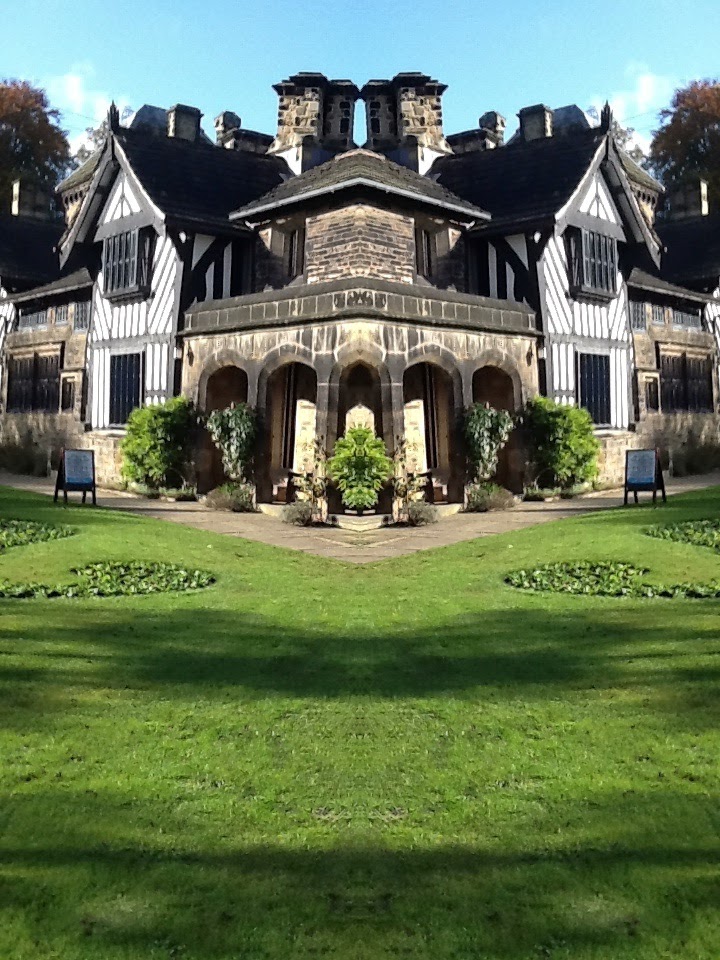
I've just finished reading Shirley by Charlotte Bronte.  Actually, I've read it a couple of times before, but barely remembered it (apart from the curates and the Luddites).  The main reason I read it this time was to try and decide if there was any connection between the title character, Shirley Keeldar, and Anne Lister of Shibden Hall.  I thought it was possible.  West Yorkshire (the West Riding in Anne Lister and the Brontes' day) isn't that big, and the lifetimes of the two women overlapped.  As Anne Lister was a landowner, she would have been a well-known character to people living in the West Riding in the early 19th century.  Did Charlotte Bronte know her, and did she have any influence on the creation of Shirley?  The question interests me because Shibden Hall has been a favourite place for me since early childhood.  The Bronte sisters are also local characters (born in the village just across the fields from mine), and I feel I have a ...

Handless Maidens

Image
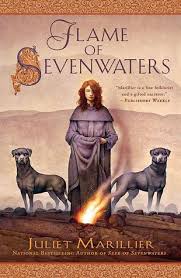
Just recently, I read Flame of Sevenwaters by my all-time favourite author, Juliet Marillier .  Juliet is the writer I look up to most in my own work.  She has been very helpful with Silver Hands , giving it a great review on the Top Hat Books site .  When Silver Hands came out, I sent her a copy and she sent me a lovely card, promising to read it.  So it was strange to think that we might both be reading each other's works at the same time, especially as both were about a girl without the use of her hands. This wasn't deliberate.  Although I am a big fan of Juliet, and Silver Hands is in some ways inspired by her writing, I didn't know she was also going to be writing about a handless maiden.  It's interesting to make some comparisons. (Warning: possibly spoilers).  Juliet's Maeve hasn't lost her hands completely, but has had them burned in a fire as a child, so they are scarred and immobile.  She faces some of the same challenges as Marg...

Silver Hands - Hidden Japan Part II

Image
Last time, I told you about my trip to Japan in 2011, and some of the sites which influenced Silver Hands.   Today, I will complete the tour and look at three more historic Japanese sites with Silver Hands connections. I'd like to start with Seison-kaku, a villa in Kenrokuen Garden, Kanazawa.  The garden itself is a splendid traditional garden, with tea-houses, pines, plum groves and cherry trees.  But the villa is particularly interesting because it was built for a woman: Shinryu-in, widow of Maeda Narinaga.  It is fascinating to look at the different rooms, which are named after the paintings on their skirting boards (tortoise room, butterfly room etc.), to stand in the grand reception room (pictured above) and imagine life as a Japanese noblewoman in days gone by. This is the future Taro pictures for Margaret. Last time, I spoke about Nijo Castle in Kyoto, which houses a magnificent set of mansion buildings.  For those of you familiar with Lian Hea...